How a Dental Bridge Works
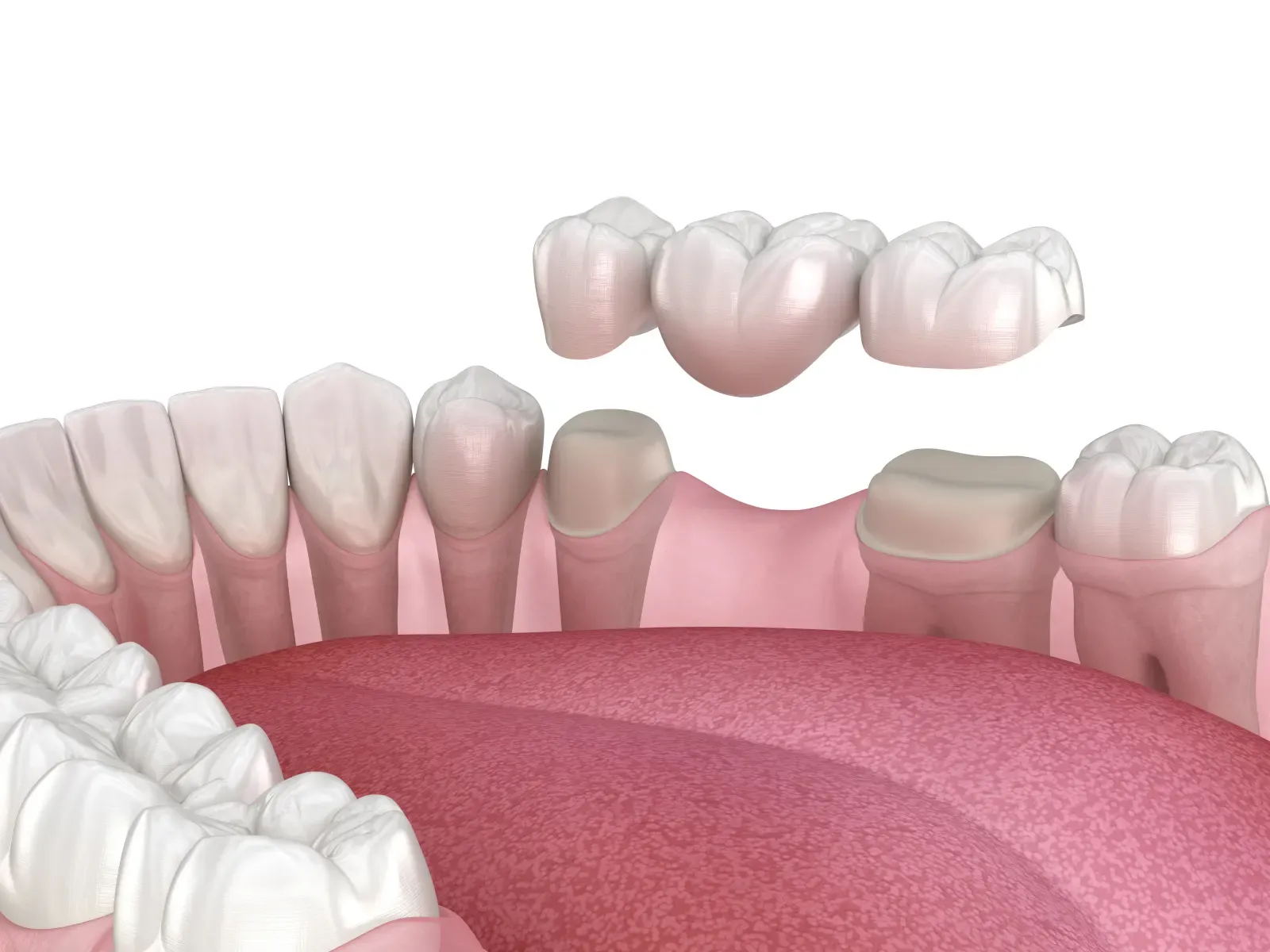
A dental bridge is a false tooth held up by the healthy teeth on either side of your gap. Those two neighboring teeth get shaped and capped with crowns, the false tooth is joined between them as one piece, and the whole thing is cemented in place. Nothing clips in, and nothing comes out at night.
That fixed feel is why so many people choose a bridge over a partial denture. It is one of the most common forms of missing tooth gap treatment, and it is usually the faster route, since there is no healing period to wait through.
Signs You Need a Dental Bridge
The clearest sign you need a dental bridge is an open space where one to three teeth used to be, with a solid tooth still standing at each end. The other signs build up slowly, though, which is why they are easy to brush off.
Here is what to watch for:
- You chew on one side only. Most people start favoring the strong side without realizing it. Over time, that extra load wears down those teeth and can leave your jaw sore.
- Nearby teeth are tilting or drifting. Teeth lean toward an open space. The tooth above or below the gap can also start to drop down into it.
- Food keeps packing into the space. If you are digging food out of the same spot after every meal, the gap is the reason.
- Your bite feels different. Teeth that shift change how your upper and lower jaws meet, which can lead to clicking, clenching, or headaches.
- Certain words are harder to say. Front gaps in particular affect “s” and “th” sounds.
- Your cheek looks slightly sunken near the gap. Bone under a missing tooth slowly shrinks, and the soft tissue follows it.
- A tooth is coming out soon. If you have been told a tooth cannot be saved, it helps to plan the replacement before the extraction appointment, not months afterward.
If any of these sound familiar, you are in good company. According to CDC survey data, only 48% of adults aged 20 to 64 still have a full set of permanent teeth, which means more than half have lost at least one.
Dental Bridge Candidates
Strong dental bridge candidates have a gap of one to three teeth, healthy teeth standing on both sides, and gums and bone in good shape. Beyond that, the decision usually comes down to the condition of those two neighboring teeth.
| Your Situation | What It Usually Means for You |
|---|---|
| The teeth beside the gap are already heavily filled, cracked, or worn | A bridge is often the better value, since those teeth were heading for crowns anyway |
| The teeth beside the gap are perfectly healthy and untouched | Worth asking about a dental implant first, since it leaves them alone |
| You do not want to wait months for healing | A bridge is the quicker option |
| There is very little bone left under the gap | A bridge does not rely on that bone, so grafting is not needed |
| A supporting tooth is loose from gum disease | The gum issue has to be treated first, and another plan may suit you better |
Those first two rows are where the real decision sits. When the neighboring teeth already need dental crowns, a bridge does two jobs in one treatment. When they are sound, though, ask about dental implants before you commit, because shaping two healthy teeth is a trade you only make once.
Age on its own is never a disqualifier. In fact, tooth loss is common later in life: CDC estimates show that 33% of adults aged 65 and older have lost 6 or more teeth. What matters far more is the health of the teeth doing the work.
The Dental Bridge Procedure
The dental bridge procedure takes two visits spread a few weeks apart, and you leave the first one with a temporary bridge in place. Here is the order things happen in:
- Exam and X-Rays: We check that the teeth on both sides are strong enough to carry a bridge and that the surrounding gum and bone are healthy. If a supporting tooth has an infected or dying nerve, it may need root canal treatment before anything else.
- Preparing the Teeth: You are numbed with local anesthetic, then Dr. Sandstrom shapes the two supporting teeth so crowns can fit over them. We take an impression or digital scan and send it to the lab.
- Fitting Your Temporary: A temporary bridge protects the prepared teeth and fills the gap while your permanent one is made. You eat and speak normally with it, just a little more gently.
- Placing the Final Bridge: We try the finished bridge in and check the fit, the bite, and the shade against your other teeth. Once everything looks right, it gets cemented in.
Most people describe the visits as uncomfortable at most, not painful. Your gums may feel tender for a day or two after the teeth are prepared, and warm salt water rinses usually settle that down.
Caring for Your Bridge Afterward
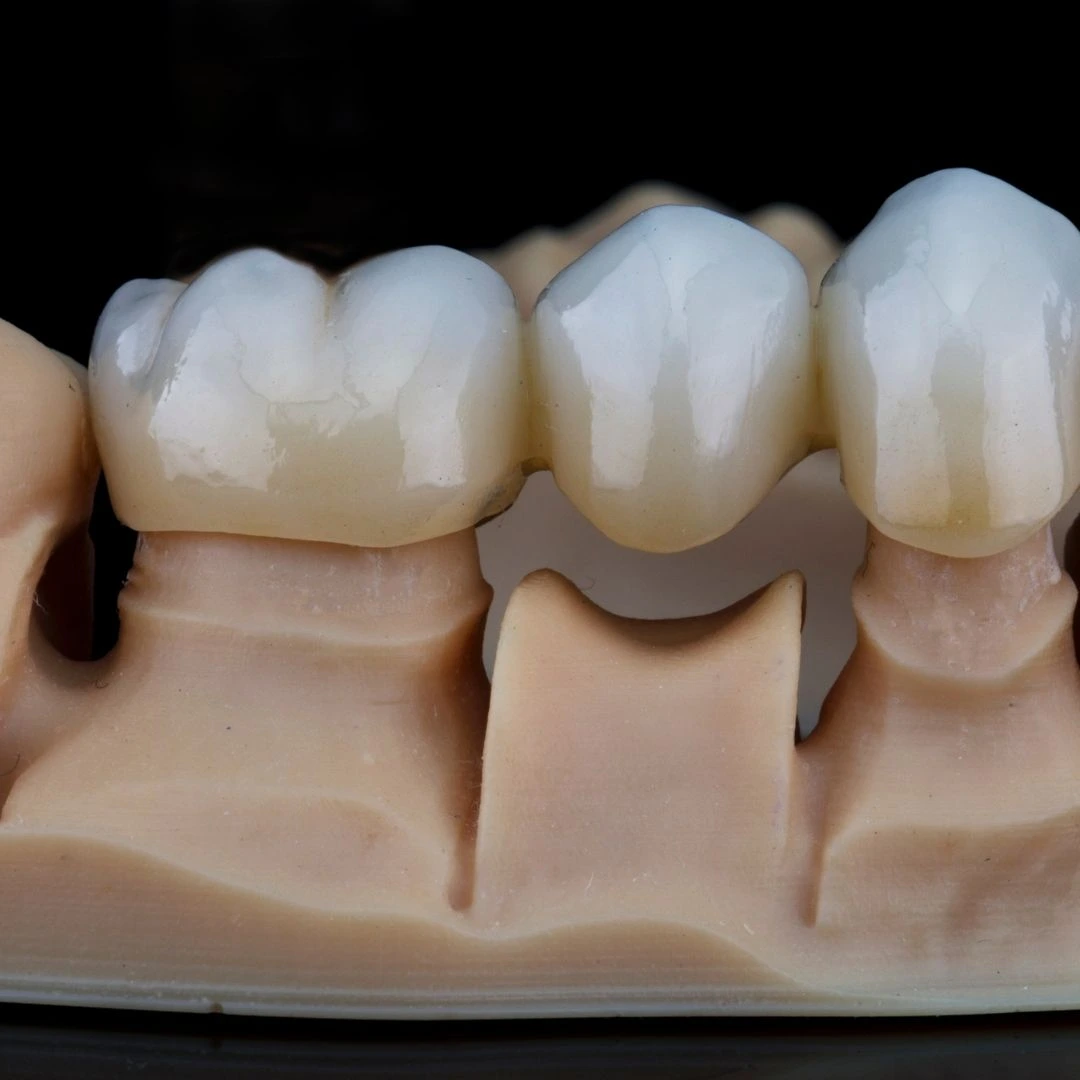
Here is the part most people are never shown: regular floss cannot pass between the false tooth and its crowns because all three are joined together. So normal flossing only cleans around the outside and leaves the underside untouched.
To reach underneath, use a floss threader or superfloss, an interdental brush where there is room for one, or a water flosser alongside threading. Then keep up with your regular cleanings so the crown margins get checked by someone who can actually see them. Look after those two supporting teeth, and you are looking after the bridge.