The Difference Between Dental Implants and Dentures
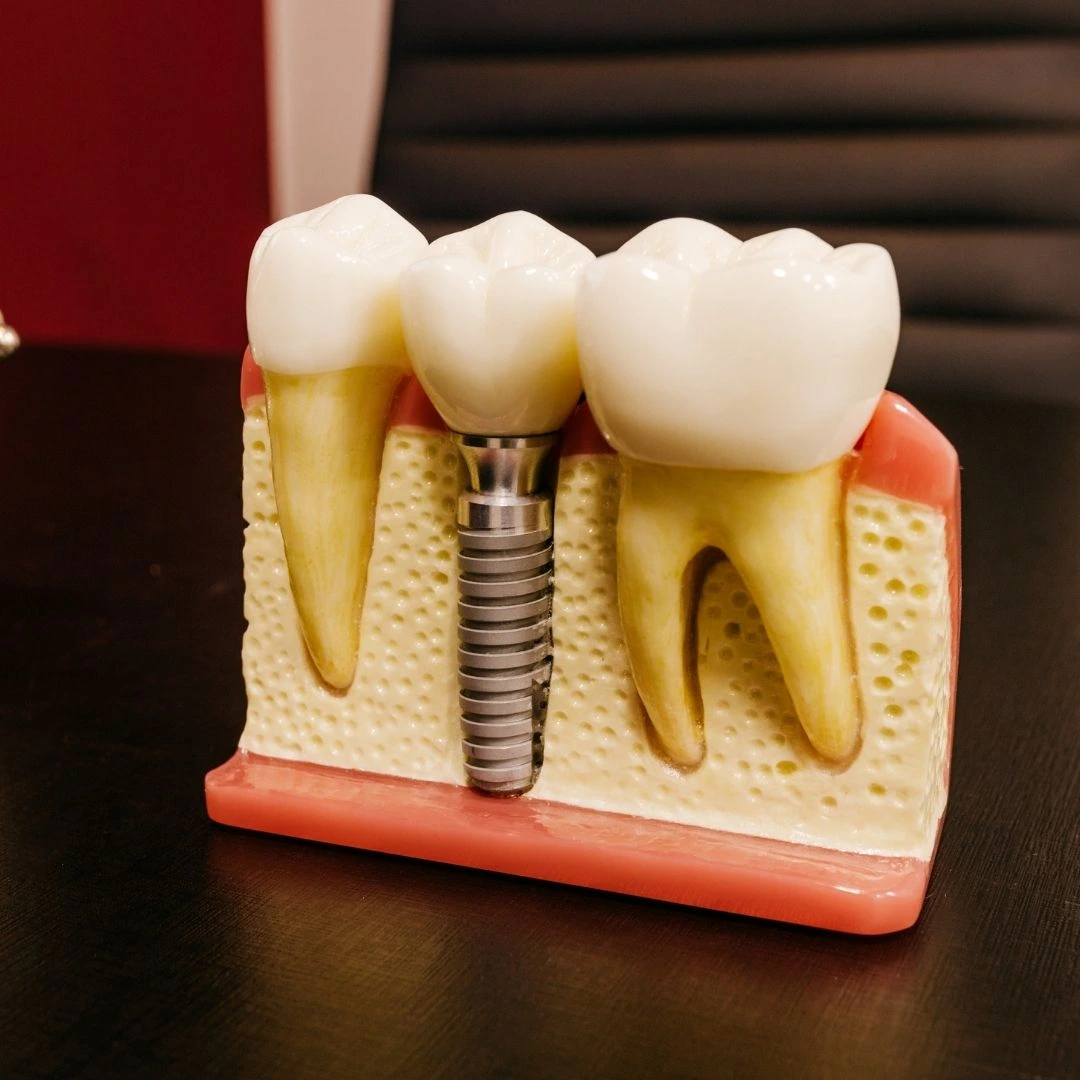
A dental implant replaces the root of your tooth and stays in your mouth permanently. A denture sits on top of your gums and comes out at night. That one difference shapes everything else about the two treatments.
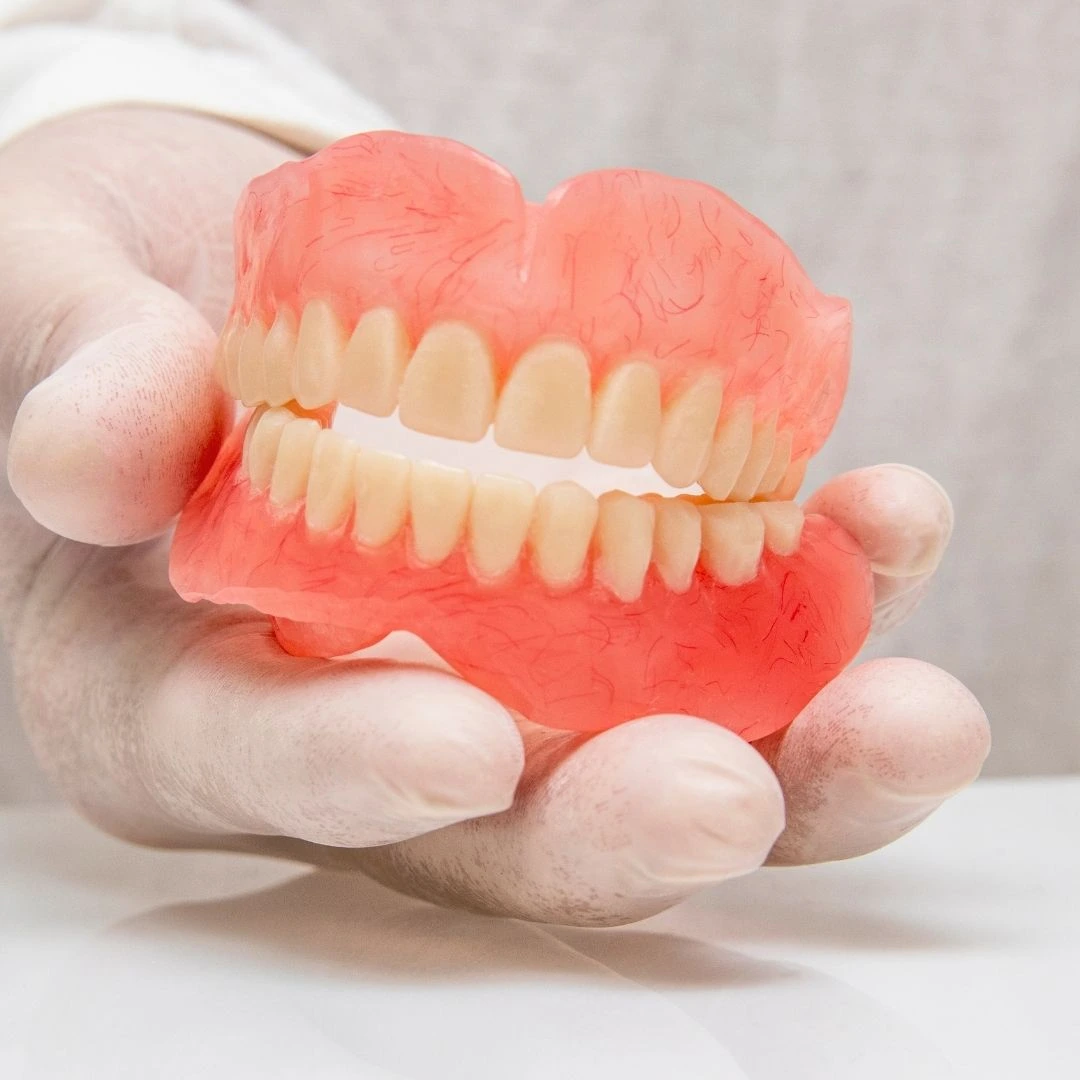
With an implant, we place a titanium post into the jawbone where your tooth root used to be, let the bone grow around it, then attach a crown on top. It’s anchored in bone, so it holds your bite the way a natural tooth does. A denture, on the other hand, is a removable appliance that rests on the gum tissue and is held in place by suction, clasps, or adhesive.
| Dental Implants | Dentures | |
|---|---|---|
| How they stay put | Fused into the jawbone | Rest on gums, suction or adhesive |
| Removable? | No | Yes, daily |
| What they replace | The root and the tooth | The visible tooth only |
| Best for | One tooth or a few | Several teeth or a full arch |
Good Candidates for Dental Implants
Dental implants work best if you’re missing one tooth or a few, have healthy gums, and have enough bone left in your jaw to hold the post. Implants also make sense if you’d rather not take anything out at night.
You’re likely a strong candidate if:
- You’re missing a single tooth and the teeth on either side are healthy
- You don’t want two sound teeth cut down to support a bridge
- Your gums are in good shape and any gum disease has been treated
- You’re willing to wait a few months while the bone heals
Age, by the way, rarely rules anyone out. Plenty of our implant patients are in their 70s and 80s. What matters far more is bone health and how your body heals. And durability is real: a systematic review in the Journal of Dentistry found a 10-year implant survival rate of 96.4%.
One more thing worth knowing. If the tooth is damaged but still has a healthy root, you may not need a replacement at all. Sometimes, a crown can save the tooth you already have.
Good Candidates for Dentures
Dentures make the most sense if you’re missing several teeth or a full arch, if your jawbone can’t support implants, or if you need a working solution sooner rather than later. They’re also the more affordable route when you’re replacing a lot of teeth at once.
Consider dentures if:
- You’re missing most or all of the teeth in one or both arches
- Bone loss makes implant placement difficult without grafting first
- You want to be eating and smiling normally within weeks, not months
- Cost is a major factor in your decision
Tooth loss is more common than most people think. According to the CDC’s National Center for Health Statistics, 12.9% of adults aged 65 and over had lost all their natural teeth between 2015 and 2018. So if you’re in that group, you’re far from alone.
Here’s something that sets our office apart: we make our dentures in our own on-site lab. Most practices mail the work out and wait. We don’t. That means faster fittings, faster adjustments, and you get to talk directly with the person doing the work instead of playing telephone.
Cost, Timing, and Upkeep Compared
Dentures cost less upfront and come together faster, while implants cost more at the start but usually last longer with less fuss. Think of it as paying now versus paying later.
| Dental Implants | Dentures | |
|---|---|---|
| Upfront cost | Higher per tooth, since surgery and a custom crown are involved | More budget-friendly, especially for a full arch |
| Time to finish | Several months, because bone needs time to fuse around the post | A few weeks from first visit to final fitting |
| Long-term upkeep | Brushing, flossing, and regular checkups, same as natural teeth | Relines as your jaw changes, plus replacement every five to ten years |
| Daily routine | Nothing changes | Remove and clean each night, soak while you sleep |
| Effect on jawbone | Stimulates bone and helps prevent shrinkage | Bone gradually shrinks underneath, which is why fit changes |
| Repairs | Crown can be replaced without disturbing the post | Cracks and loose fits handled in our on-site lab |
Other Tooth Replacement Options in Mesa, AZ
Implants and dentures aren’t your only tooth replacement options in Mesa, AZ. Depending on which teeth are missing and what shape the neighboring teeth are in, a bridge might be the smarter move, or the tooth may simply need to come out first.
A dental bridge fills the gap by anchoring to the healthy teeth on either side. It’s often the better pick when those neighboring teeth already need crowns anyway, since one treatment handles two jobs.
And if the tooth is still in your mouth but beyond saving, we’ll talk about extracting the tooth comfortably and planning for the space it leaves behind before anything else happens.
Sometimes the honest answer is to leave a gap alone. A back molar you don’t chew on and nobody can see isn’t always worth replacing. We’ll tell you that if it’s true.
Choosing the Best Way to Replace Missing Teeth
Start by answering five questions honestly, then bring those answers to a consultation. The right choice depends on your mouth, not on what worked for your neighbor.
- How many teeth am I replacing, one or many?
- How much healthy jawbone do I have left?
- What can I comfortably spend right now?
- Am I okay taking something out every night?
- How soon do I need this finished?
Once you’ve thought those through, an exam and X-rays fill in the rest. That’s the part guesswork can’t cover. Dr. Sandstrom’s approach is to look properly, explain exactly what’s there, lay out every option including waiting, and let you make the call. Nobody here is going to sell you a treatment plan.